
Natural Labor Coping: How to Work With Your Body During Birth
Our culture tends to fear pain. We often see pain as something to avoid, numb, or escape as quickly as possible. But labor pain is different.
Labor pain serves an important purpose.
The intensity of contractions is the body’s natural nudge to seek comfort, encouraging you to move, shift, sway, lean, rest, and breathe. Those movements and continual position changes help your baby find the best fit down into, and through the pelvis.
As you find comfort and cope with labor, your body gets into the hormonal rhythm of labor. Oxytocin helps power contractions, and as contractions intensify, the body also releases beta-endorphins, your natural pain-relieving hormones. Stress and fear can interfere with labor progress, but feeling safe, supported, and loved helps your body continue doing the work of labor and birth.
In this post, we’ll walk through a few simple mechanisms in the body—including pain, joint, and pressure receptors—so you and your partner can better understand how to work with your body’s innate sensors, and more effectively cope with labor.
The Gate Control Theory of Pain
One way to understand why the labor comfort techniques below work is through the gate control theory of pain. In simple terms, this theory suggests that that sensations like pressure, movement, touch, and vibration compete with or ascend to the brain faster than pain signals. Thus as the brain receives the slower pain signal, it will gate out the slower pain signal and you percieve less pain.
That is why you instinctively rub your toe after stubbing it, or shake your finger after it gets pinched. The pressure and shaking gives your brain another signal to process.
In labor, you can use that same idea intentionally. Counter pressure, hip squeezes, position changes, breathing, labor combs, and firm touch all give your body strong sensory input that may help make contractions feel more manageable. Two specific types of receptors that signal to the brain faster than pain that are SO helpful in labor are joint receptors, and Merkel’s Disks.
Joint Receptors: Why Movement and Pressure Help
Your joints have receptors that help your brain understand where your body is in space. They respond to movement, pressure, and position changes.
This is part of why labor often feels harder to cope with when you lay down. When you are upright, moving, swaying, leaning, or receiving firm pressure, your nervous system gets more helpful input on the joint receptors. That input can help your body cope with contraction intensity and override the pain signals.
Specific techniques that we use as doulas that are incredibly effective:
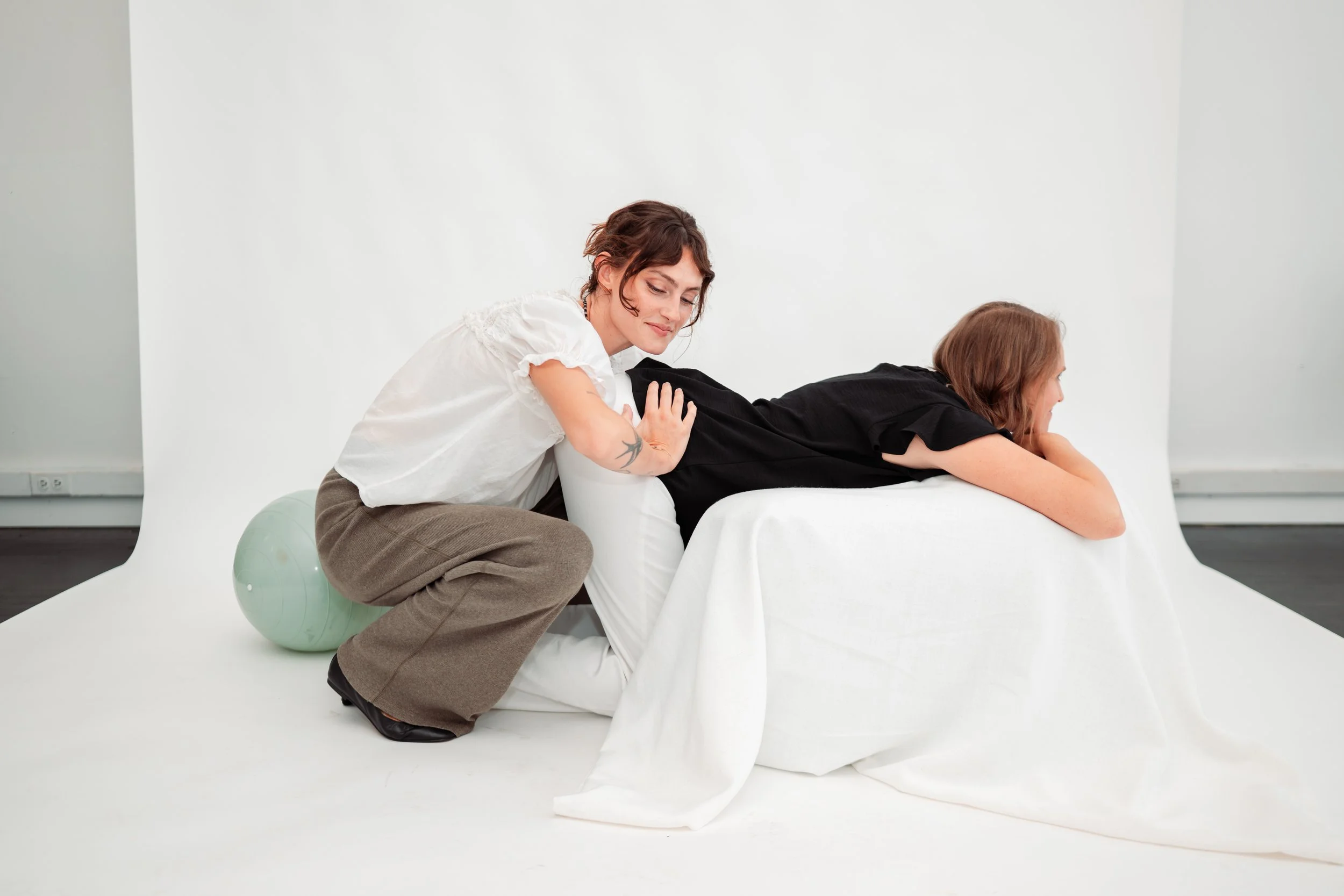
Counter pressure on the low back
Hip squeezes during contractions
Swaying, rocking, or slow dancing
Hands-and-knees or side-lying positions
Birth ball or backwards toilet sitting
If waiting for an epidural to take effect: pressing the knees gently back toward the hips
Breathing techniques may also help because every deep breath moves the rib joints.
These movements additionally give the body rhythm, focus, and multiple sensory inputs. For enhanced comfort and sensory distraction add in heat or cold packs, music or guided imagery, or a TENS unit.
Merkel’s Disks: Why Labor Combs and Pressure on Feet Help
Merkel’s Disks are another helpful part of the nervous system. These are nerve endings found in high numbers especially in the palms and soles of feet that respond to firm, steady pressure.
This helps explain why labor combs or acupressure balls can be so effective. When you squeeze a comb in your palm during a contraction, that firm pressure creates a strong and faster than pain sensation that can help reduce the perceived intensity of contractions.
Similar tools may include:
Labor combs
Acupressure balls held firmly, or rolled underfoot
Standing, swaying, or rocking through the feet
Standing on an acupressure/pebble mat
Firm touch or pressure from a partner or doula
These tools are simple, but they can be surprisingly helpful.
A quick safety note: anything involving standing, walking, or pressure under the feet should be used with support nearby. Also there is some thought that there are acupressure points in the feet that can stimulate labor so be careful during pregnancy.
The Bottom Line
Labor pain has a purpose, but that does not mean you have to experience it without support. Working with your innate receptors, prepare for labor with your support person and doula by practicing movement, pressure, breathing, labor combs, and firm touch during pregnancy.
By the time you get to labor you don’t want to have to be learning new information, you want to be able to immerse yourself into labor land already equipped to cope with intensity one contraction at a time.
These techniques will not erase the intensity of labor. But they will work with your natural hormones and receptors to help your body cope with contractions, feel more grounded, more supported, and capable and let your body move through labor and birth.